
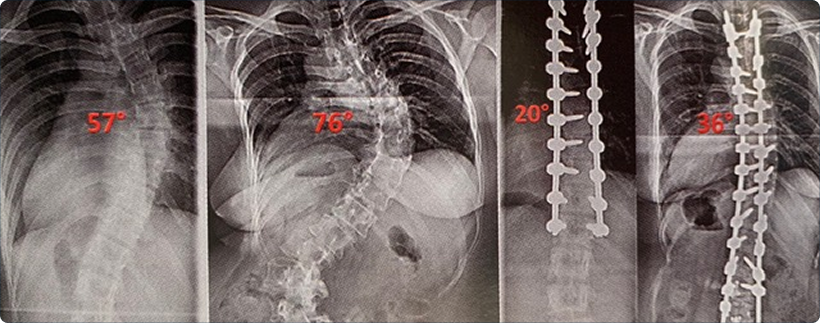
Comprehensive Spinal Deformity Care Under One Roof
Scoliosis is a condition in which the spine curves abnormally from side to side. On an X-ray, a healthy spine appears as a straight vertical line. In a patient with scoliosis, that line bends into an “S” or “C” shape. The condition is three-dimensional, meaning it also involves rotation of the vertebrae, the individual bones that make up the spine.
Scoliosis ranges widely in severity. Some curves are mild and require only monitoring. Others progress over time and may cause pain, postural changes, or, in more severe cases, affect heart and lung function. The degree of the curve, measured in angles on an X-ray, guides treatment decisions at every stage.
Scoliosis can develop at any age. It is most commonly identified during childhood and adolescence, particularly during periods of rapid growth. Girls are statistically more likely than boys to develop curves that progress and require treatment.
Explore Scoliosis & Spinal Deformities
Scoliosis looks different depending on when it develops and how it progresses. Select a condition below to learn more.

Pediatric Scoliosis
Idiopathic scoliosis, the most common form, typically appears in children between the ages of 10 and maturity. No single cause has been identified, though genetic factors are increasingly understood to play a role. Early detection and careful monitoring are essential during the growth years, as growth curves can progress quickly during adolescence. Bracing is often recommended to prevent progression, while surgery may be considered for larger curves.

Adult Scoliosis
Adults can develop scoliosis for the first time or experience progression of a curve that was present since adolescence. Unlike pediatric scoliosis, which rarely causes pain initially, adult scoliosis often presents with back and leg pain, as well as difficulty standing upright for extended periods. Treatment ranges from physical therapy and pain management to surgical correction for curves that significantly affect quality of life.

Other Causes of Back Pain
Back pain isn’t always scoliosis. Dr. Siambanes also evaluates and treats Spondylolysis and Spondylolisthesis, and Scheuermann’s Disease.
Symptoms to Watch For
Common Signs of Scoliosis
Not everyone with scoliosis knows they have it. In children, it often turns up at a school screening. In adults, it may be discovered incidentally or finally investigated after years of back pain. Either way, the physical signs are worth knowing. If any of these sound familiar, a consultation and X-ray will give you a clear picture.
Treatment Approach
How Scoliosis Is Treated
Treatment depends on the patient’s age, curve size, rate of progression, and impact on daily function. Each patient is evaluated individually before a path forward is recommended.
Step 1
Monitoring
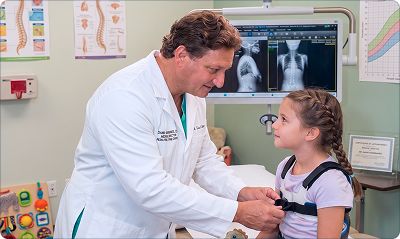
For mild curves in growing children, regular physical exams and X-rays track whether the curve is stable or progressing. Many mild curves never require further treatment.
Step 2
Bracing
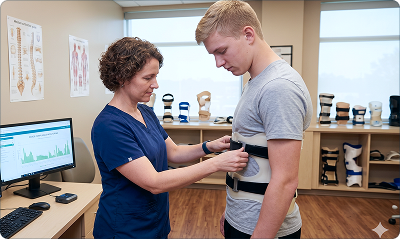
When a curve reaches the range where progression is likely, a brace prevents further worsening during growth years. Compliance with brace wear is key to success.
Step 3
Surgery
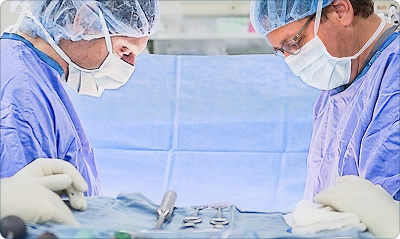
For mild curves in growing children, regular physical exams and X-rays track whether the curve is stable or progressing. Many mild curves never require further treatment.
contact us
Explore Your Scoliosis Care Options
Schedule a consultation with Dr. Siambanes to get a clear picture of where your curve stands, your options, and what to expect with treatment.
"*" indicates required fields