
Adult Scoliosis
Understanding Scoliosis Care for Adults
Living with scoliosis as an adult can feel frustrating, especially when symptoms have crept up gradually over the years. The good news is that adult scoliosis is treatable, and there are more options available than most patients realize.
Dr. Siambanes helps adults understand exactly what is happening with their spine, why they are experiencing symptoms now, and what a realistic path forward looks like for their situation.
Why Adult Scoliosis Feels Different
Many adults living with scoliosis were diagnosed as teenagers and told to monitor it. For a while, that was the right advice. But scoliosis doesn’t always stay mild. Curves that were moderate at skeletal maturity tend to keep progressing in adulthood, and the body eventually reaches a point where it can no longer compensate comfortably.
Unlike adolescent scoliosis, which rarely causes pain, adult scoliosis brings a different set of challenges. Decades of wear, muscles that have adapted around the curve, and nerves that can become compressed as the curvature worsens all contribute to the symptoms patients experience. Those symptoms are real, and in most cases, they are addressable.
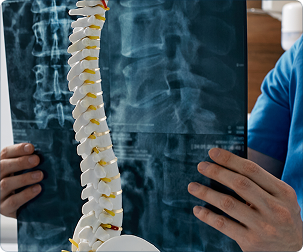
Recognizing the Symptoms of Adult Scoliosis
Adult scoliosis tends to show up in function before it shows up in appearance. Patients often describe a quiet shift – distances they can no longer walk comfortably, positions that have become difficult, activities they have gradually stopped doing without quite realizing it.
If any of these sound familiar, a thorough evaluation is the clearest way to understand what is happening and what can be done about it.
Treatment Approach
Treatment Options for Adult Scoliosis
Treatment starts with a thorough evaluation of your curve, symptoms, overall health, and personal goals. Dr. Siambanes takes time to understand the full picture before making any recommendation, and conservative care is always explored first when appropriate.
Conservative Treatment
For adults with mild to moderate curves and manageable symptoms, non-surgical care is often a very effective starting point.
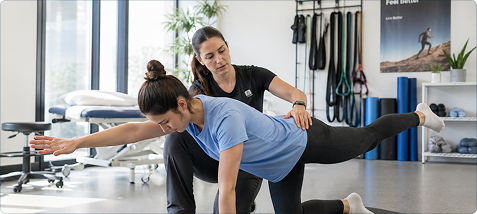
Physical Therapy
A structured program focused on core strengthening and spinal stabilization can meaningfully reduce pain and improve how you function day to day.
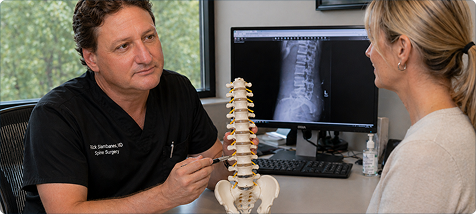
Pain Management
Anti-inflammatory medications, targeted injections, and practical lifestyle adjustments, including activity pacing and posture strategies, can extend the effectiveness of conservative management considerably for the right candidates.
Surgical Options
Anti-inflammatory medications, targeted injections, and practical lifestyle adjustments, including activity pacing and posture strategies, can extend the effectiveness of conservative management considerably for the right candidates.

Spinal Fusion and Deformity Correction
Realigns the involved vertebrae, uses bone graft to encourage fusion, and secures everything with rods and screws so the correction holds. For complex deformity cases, Dr. Siambanes uses the Daytona Deformity System, an advanced instrumentation platform designed specifically for spinal deformity correction, allowing a level of individualized surgical planning that standard systems don’t offer.

Spinal Decompression — Laminectomy and Discectomy
When leg pain, numbness, or weakness is part of the picture, nerve compression is often the cause. A laminectomy removes a portion of the lamina to relieve pressure on the spinal cord or nerve roots. Discectomy addresses herniated or degenerated disc material contributing to compression. In adult scoliosis patients, these issues frequently coexist with the curvature and are often resolved together.

Failed Scoliosis Surgery Correction
Some patients come to Dr. Siambanes having already had scoliosis surgery and are now experiencing a return of symptoms, a loss of correction, or complications from prior instrumentation. These cases are carefully evaluated using current imaging and prior operative history. A previous surgery that didn’t hold is not the end of the road.
Why Choose Dr. Siambanes
Adult scoliosis surgery is one of the most technically demanding procedures in orthopedic medicine. It takes more than surgical skill — it requires a deep understanding of spinal balance, nerve anatomy, and how every decision in the operating room affects long-term outcomes. It is not a procedure that belongs in a general orthopedic setting.
Dr. David Siambanes is board-certified in orthopedic surgery with fellowship training in reconstructive spine surgery at the University of Southern California. As founder of Scoliosis Care and director of the Scoliosis Center at St. Joseph’s Children’s Hospital, he brings a dedicated subspecialty focus to every adult scoliosis case.
He works alongside a multidisciplinary team, including physical therapists, pain management specialists, and surgical coordinators, so that patients receive coordinated, continuous support from the initial evaluation through full recovery.

Fellowship-Trained Expertise
Subspecialty training in reconstructive spine surgery at USC, with decades of experience treating complex adult spinal deformities.

Daytona Deformity System
Advanced instrumentation designed specifically for deformity correction, enabling individualized surgical planning and optimal alignment outcomes.

Multidisciplinary Team
Physical therapists, pain specialists, and surgical coordinators work alongside Dr. Siambanes from the first visit through full recovery.
contact us
Explore Care for Adult Scoliosi
If back pain, leg symptoms, or postural changes have been affecting your quality of life, you deserve a clear picture of what is happening and what your options actually are. Dr. Siambanes sees patients at every stage, including those exploring options for the first time, those who have tried conservative care without lasting relief, and those seeking a second opinion after prior surgery.
Dr. Siambanes serves adults throughout the Tampa Bay area, including Tampa, St. Petersburg, Clearwater, Brandon, Wesley Chapel, and surrounding communities.
"*" indicates required fields